Duson Pond Restoration
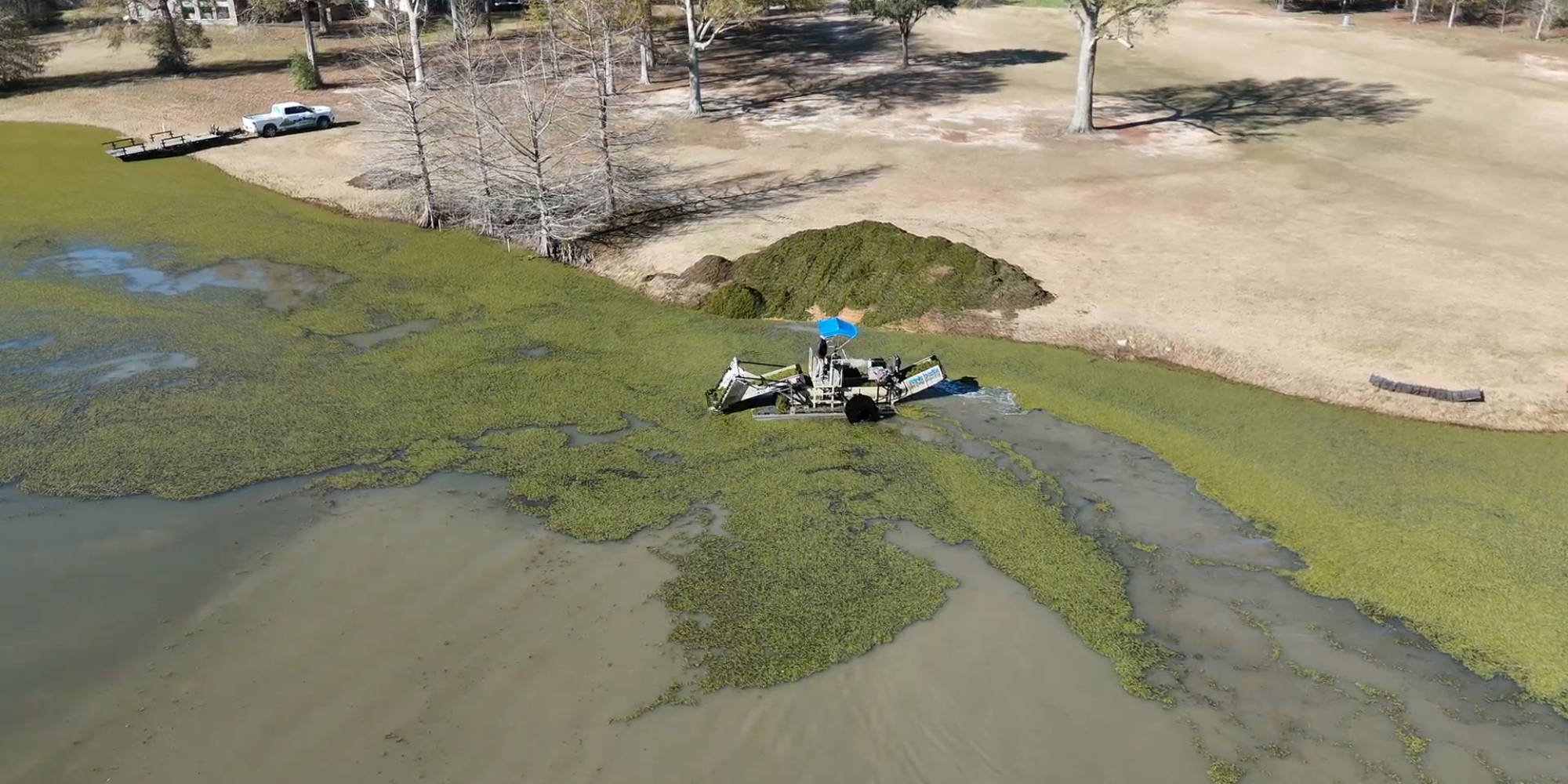
Restored a 0.5-acre pond with a southern naiad infestation using a Truxor (rake) and strainer plates to uproot and remove the vegetation.
The Challenge
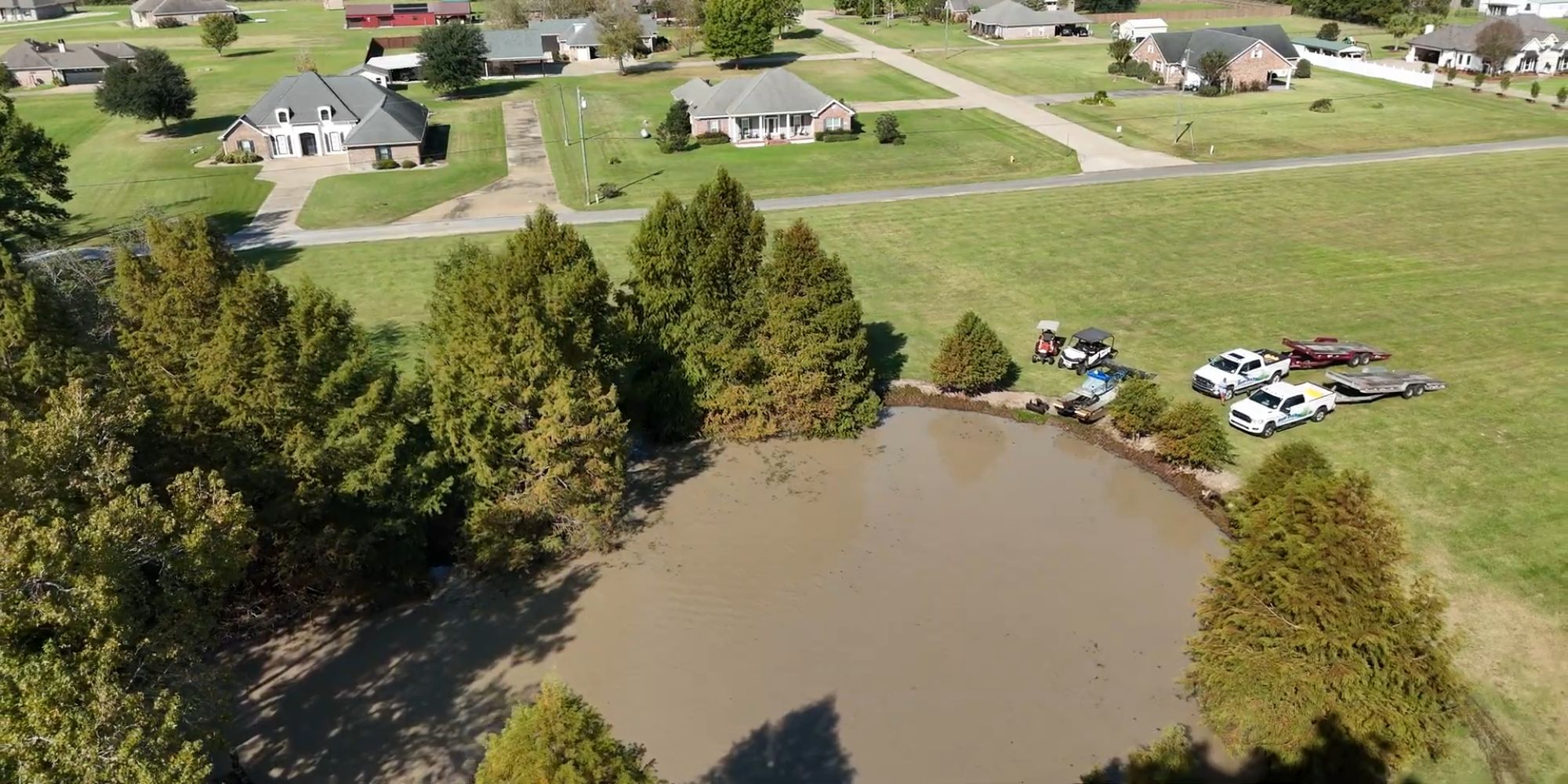
This 0.5-acre pond in Duson had developed a dense growth of southern naiad beneath the surface. The fine, branching stems formed thick underwater mats that reduced open water, impeded circulation, and made the pond difficult to enjoy and maintain.
Left unchecked, the naiad would continue to spread from fragments, further degrading water clarity and crowding out desirable habitat.
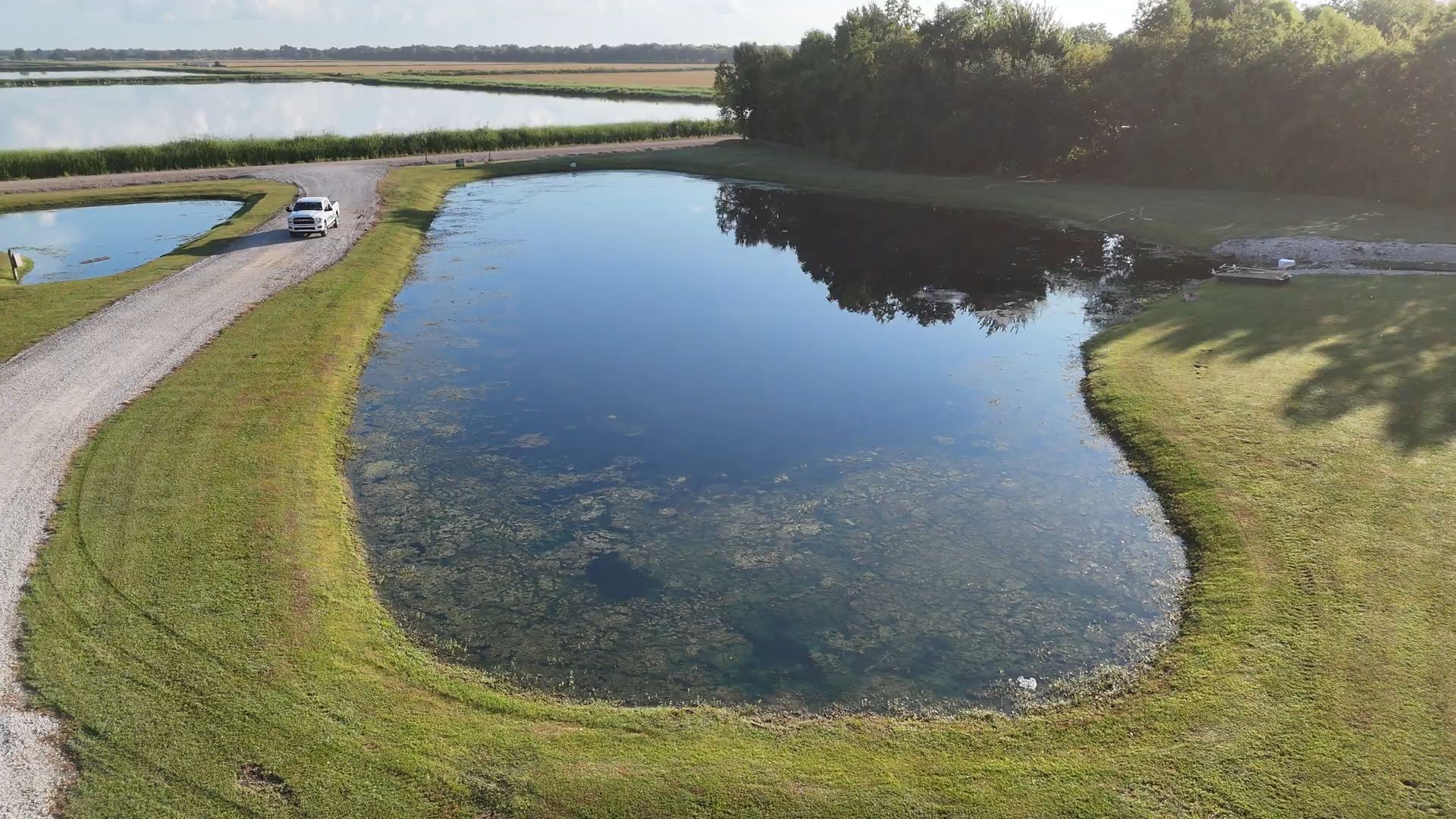
Key Issues:
- Widespread southern naiad infestation
- Reduced open water and poor circulation
- Risk of regrowth from plant fragments
- Diminished clarity and recreational use
- Accumulating organic debris on the bottom
- Early signs of ecosystem imbalance
Our Approach
Step-by-step process to achieve the transformation
Targeted Mechanical Uprooting
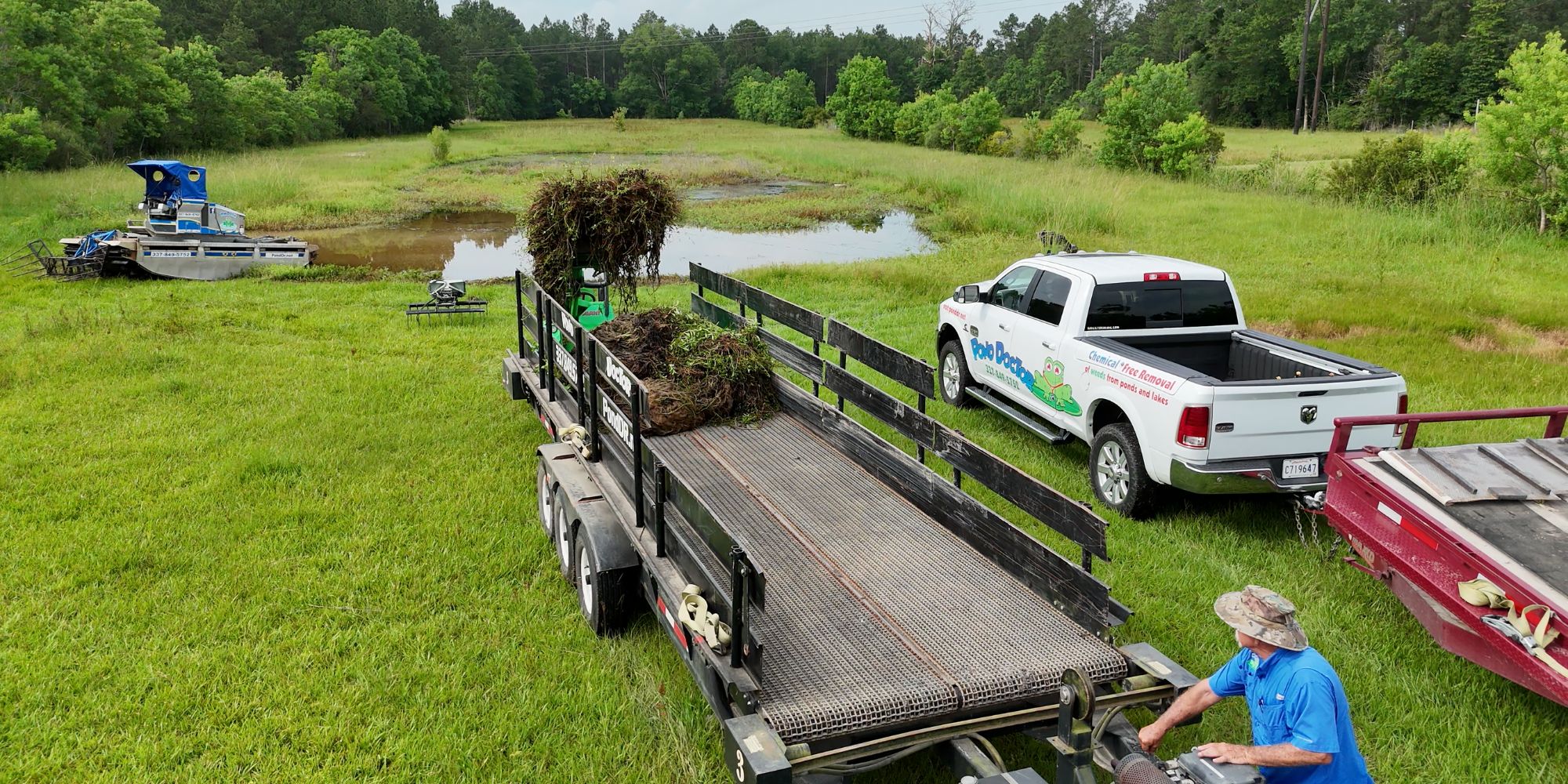
Deployed a Truxor amphibious machine equipped with rake and strainer plates to grab and uproot southern naiad at the root zone, minimizing the chance of rapid regrowth.
Controlled Collection and Offload
Captured vegetation on the Truxor attachment and transferred it cleanly to the bank for consolidation and proper disposal, keeping fragments out of open water.
Fragment Control Passes
Performed follow-up skimming passes to collect remaining pieces, reducing seed and stem drift that can re-establish growth.
The Transformation
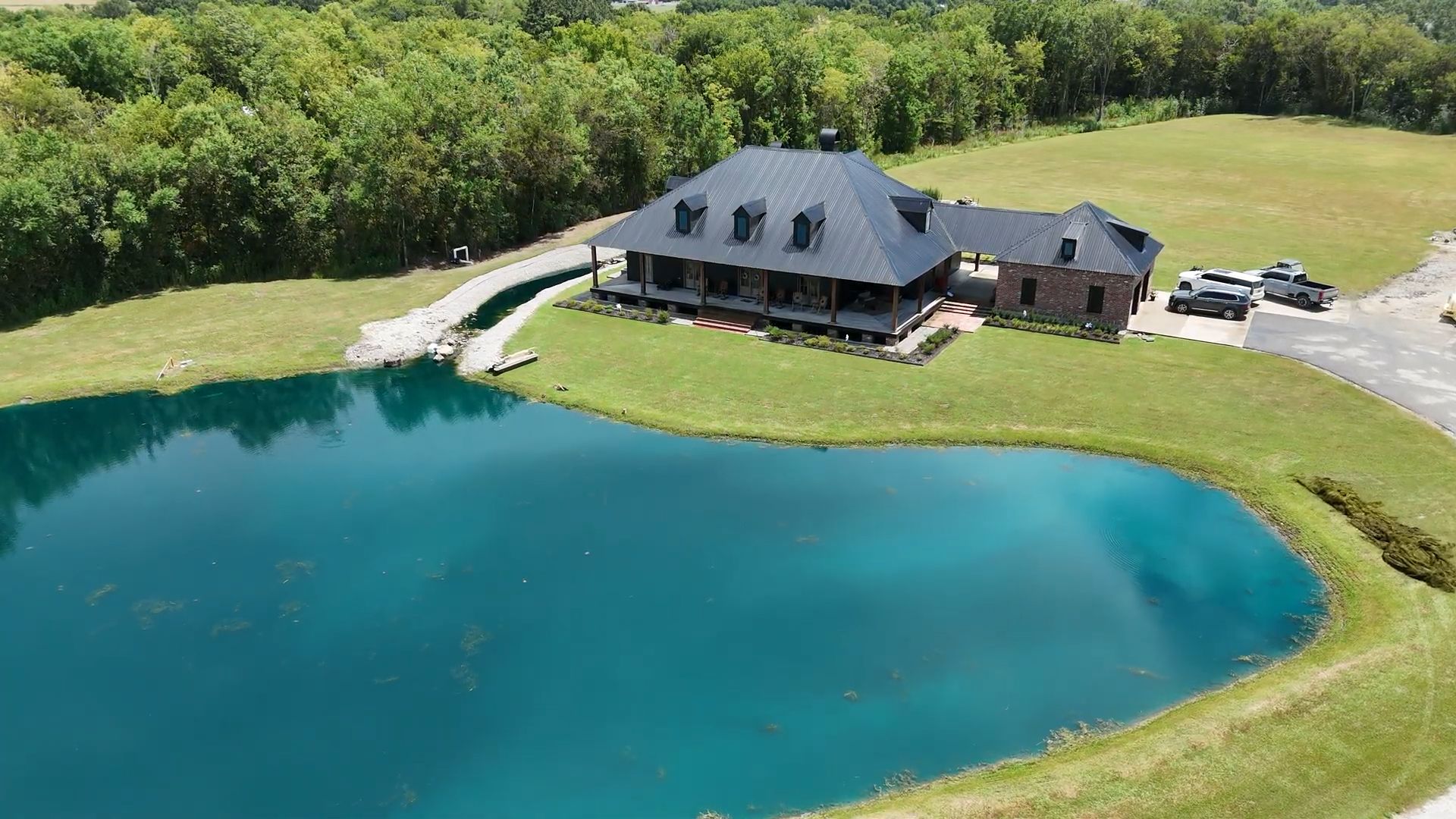
Open water and circulation were restored across the 0.5-acre pond. By uprooting and removing naiad to the shoreline, the project reduced near-term regrowth pressure and improved water clarity and overall appearance.
The pond is now far easier to maintain and ready for regular use through the warm season.
Open Water Restored
Clear, navigable pond surface across the site
Reduced Regrowth Risk
Rooted removal and fragment capture limit rebound
Improved Water Clarity
Less suspended vegetation and debris
Simplified Maintenance
Stabilized conditions for ongoing care