Money Hill Pond Restoration
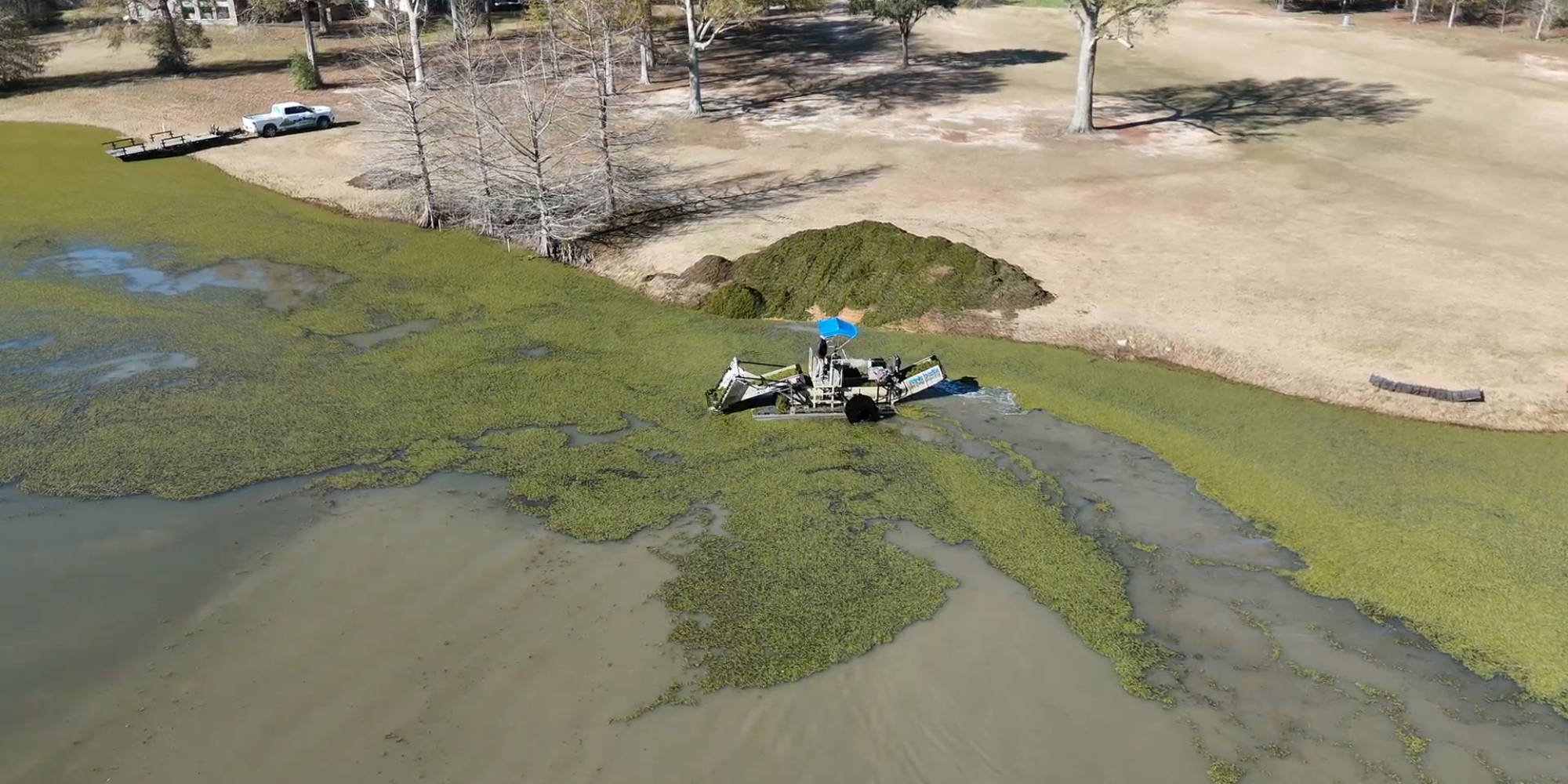
A 2.5-acre pond was blanketed with salvinia that restricted water flow. Successfully restored with mechanical removal using dual Truxors.
The Challenge
The 2.5-acre pond at Money Hill was covered with salvinia, a fast-spreading floating fern that forms dense surface mats. The blanket of growth choked off open water, reduced circulation, and threatened overall pond health.
Left unchecked, salvinia rapidly multiplies and creates thick rafts that block light and oxygen exchange, accelerating organic buildup and making access and upkeep increasingly difficult.
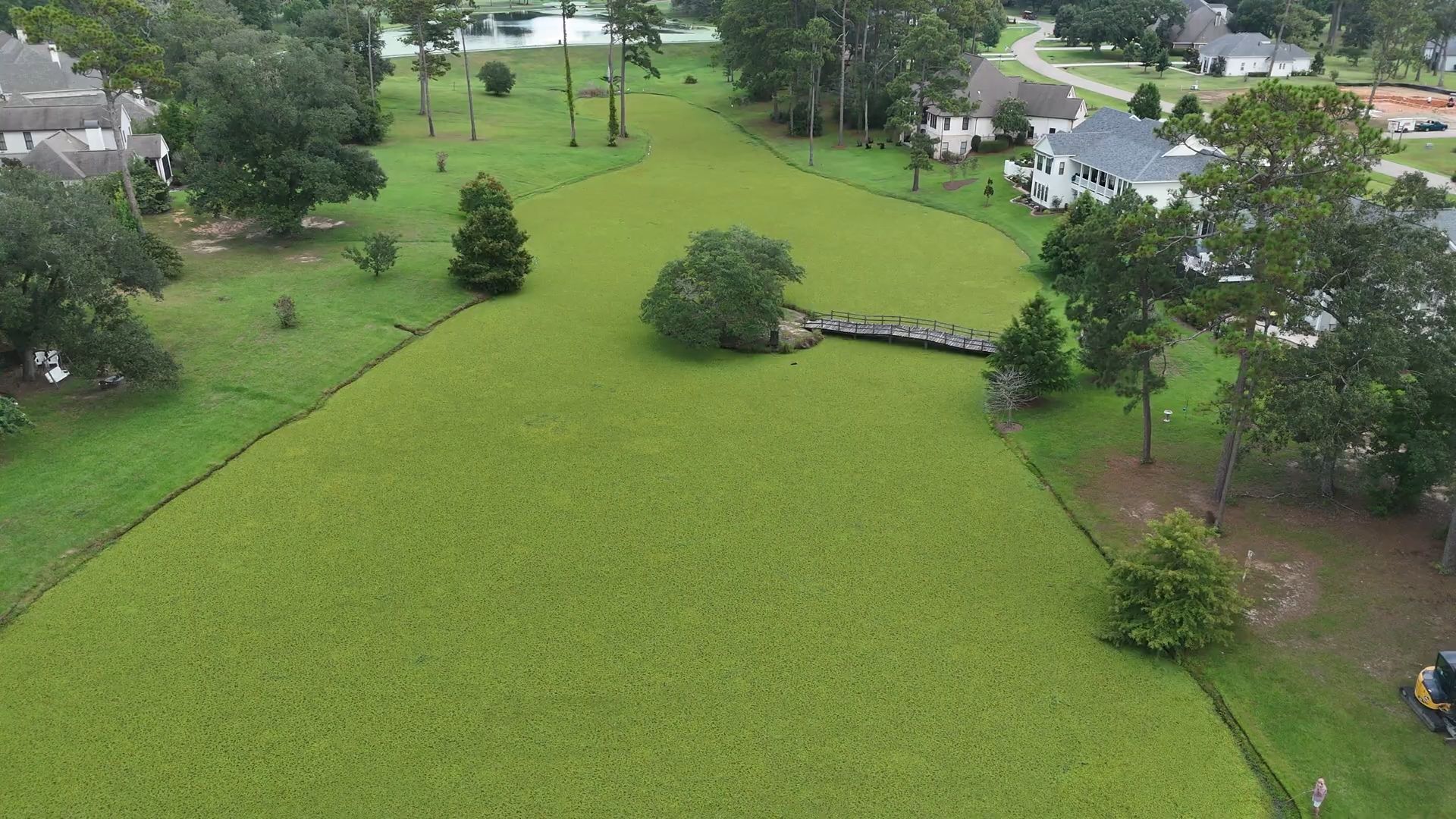
Key Issues:
- Dense salvinia mats covering open water
- Restricted water movement and oxygen exchange
- Rapid regrowth risk from remaining fragments
- Increasing organic buildup and maintenance burden
Our Approach
Step-by-step process to achieve the transformation
Dual Truxor Deployment
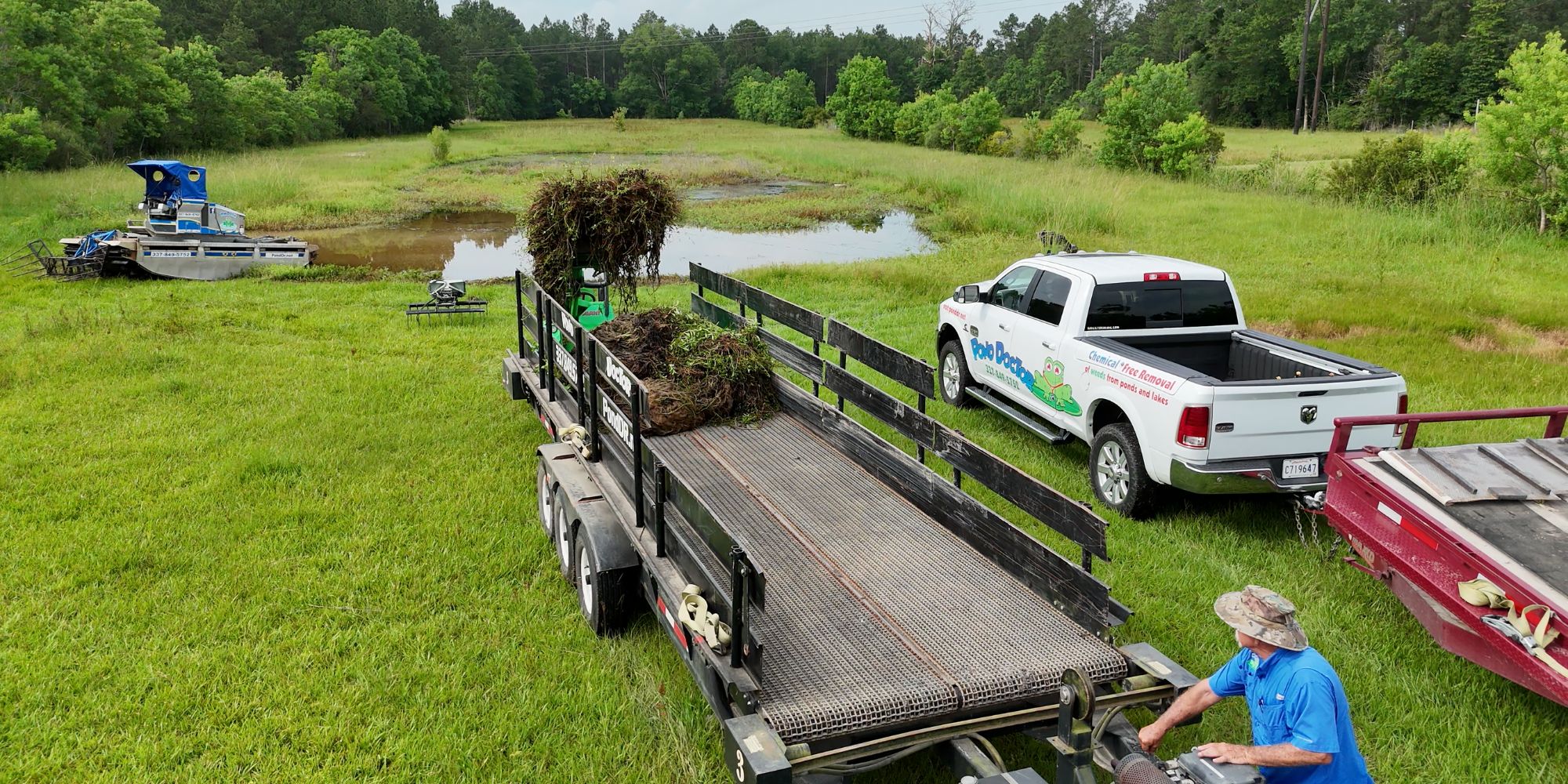
Operated both Truxors in tandem to maximize coverage and speed across the 2.5-acre surface.
Rake and Strainer Plates
Used rakes to break up thick salvinia mats and strainer plates to capture and contain floating vegetation efficiently.
Bank Offloading and Hauling
Transferred collected biomass to the bank for disposal—totaling approximately 6–8 dump-truck loads of vegetation.
The Transformation
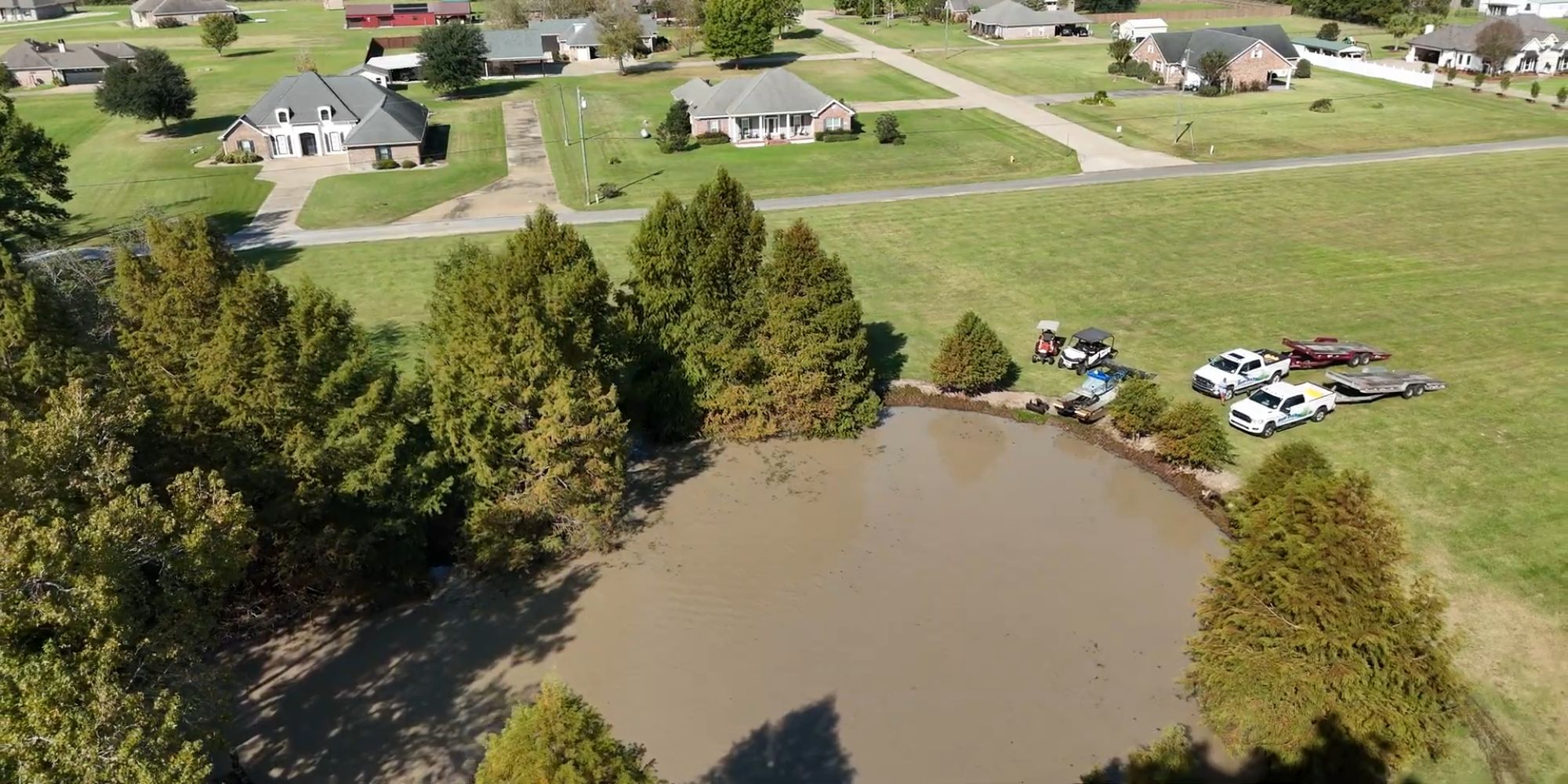
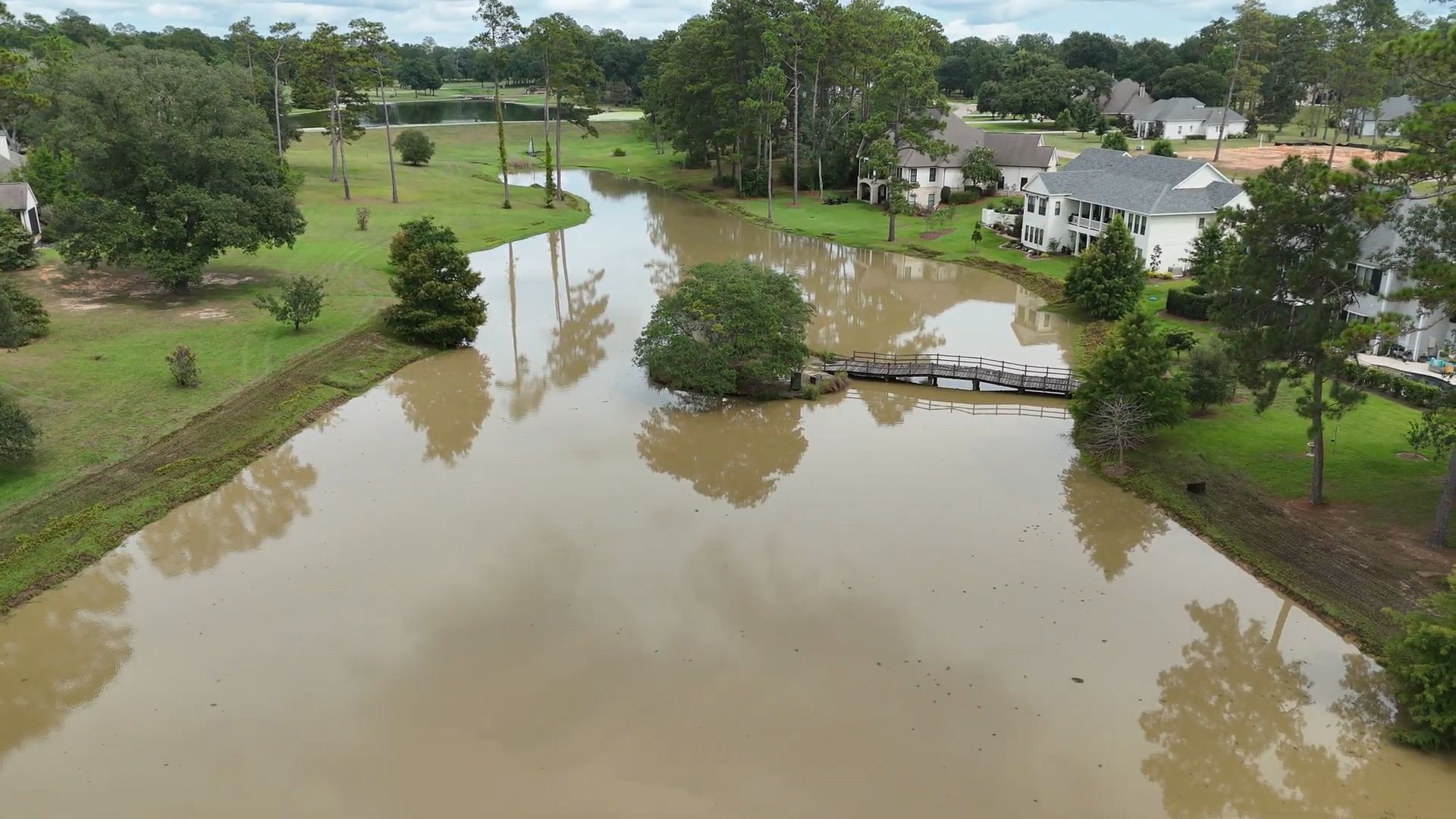
Following a thorough mechanical removal, salvinia was cleared and open water was restored across the pond. Improved circulation and light penetration rebalanced conditions for a healthier aquatic environment.
The project reduced immediate maintenance pressure and lowered the risk of rapid salvinia rebound by removing large volumes of biomass from the system.
Open Water Restored
Salvinia mats removed to reveal clear surface area
Healthier Circulation
Better oxygen exchange and light penetration
Significant Biomass Removed
Approximately 6–8 dump-truck loads off-site
Lower Regrowth Pressure
Fewer fragments left to fuel resurgence