Alligator weed is an aggressive aquatic plant that can quickly take over your pond. Understanding how to identify and control this invasive species is crucial for maintaining a healthy pond ecosystem.
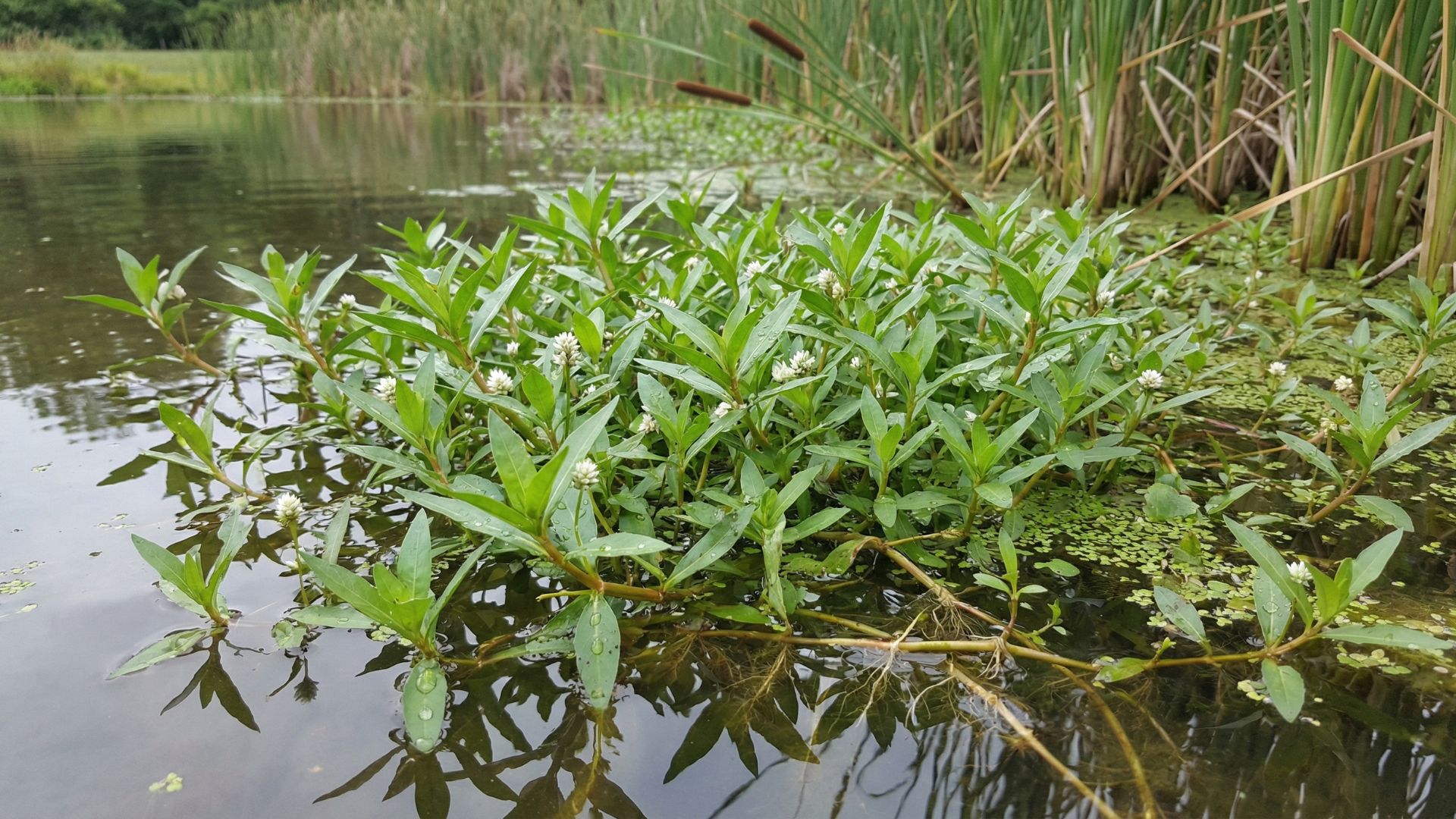
What is Alligator Weed?
Alligator weed (Alternanthera philoxeroides) is a perennial aquatic and wetland plant native to South America. It was introduced to the United States in the early 1900s and has since become one of the most problematic invasive aquatic plants in southern states, particularly Louisiana.
The plant gets its name from its hollow stems that resemble alligator skin texture. It can grow both in water and on land, making it particularly difficult to control once established.
Identifying Alligator Weed
Proper identification is the first step in controlling alligator weed. Look for these distinctive characteristics:
- Stems: Hollow, mat-forming stems that can grow up to 3 feet long
- Leaves: Opposite, lance-shaped leaves 2-5 inches long with smooth edges
- Flowers: Small white, clover-like flowers on stalks rising above the foliage
- Growth pattern: Forms dense mats on water surface or along shorelines
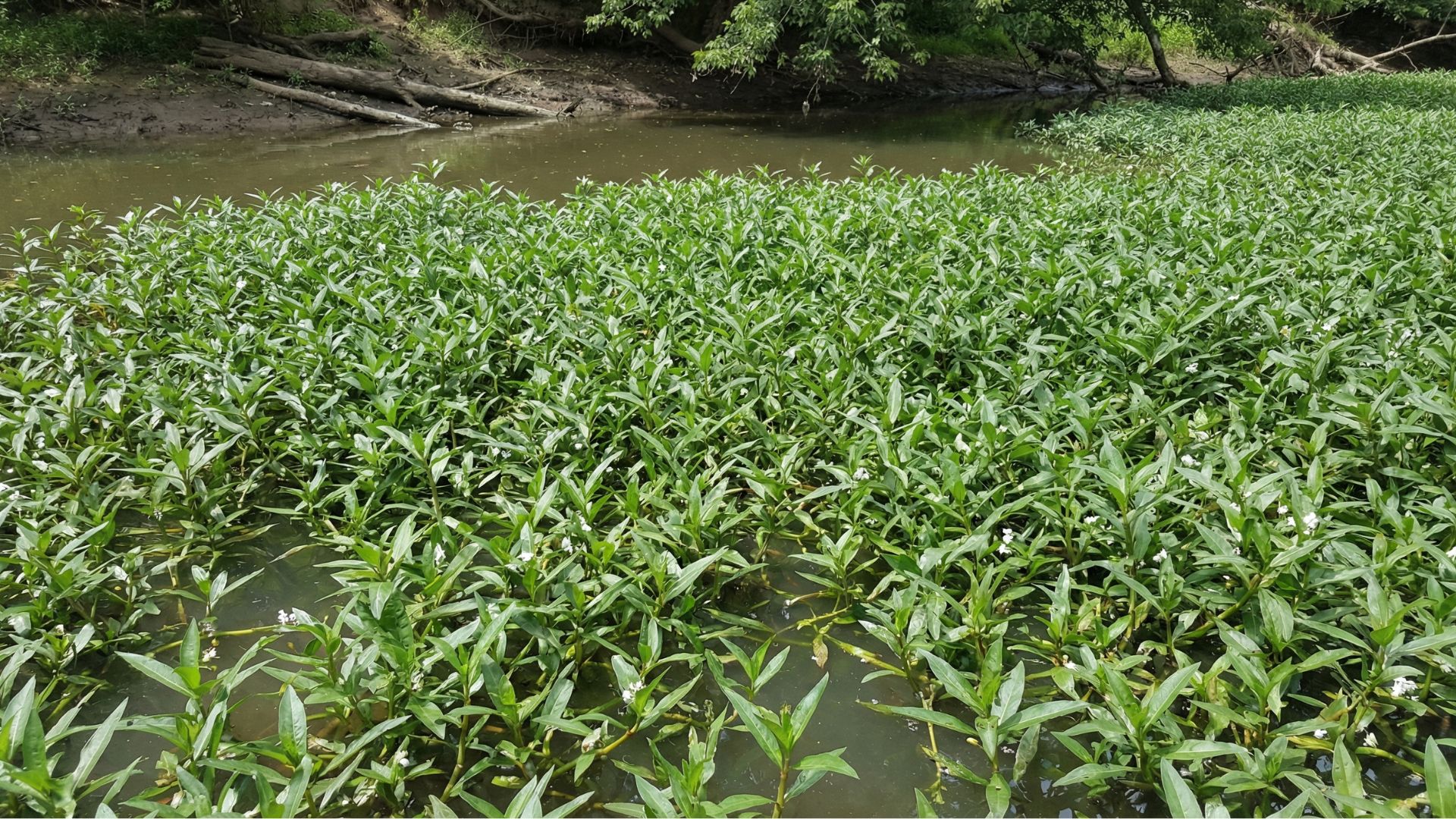
Why Alligator Weed is Problematic
Alligator weed poses several serious threats to pond health and usability:
- Blocks sunlight from reaching submerged plants and reduces oxygen levels
- Interferes with water flow and navigation
- Displaces native vegetation and disrupts habitat
- Provides breeding grounds for mosquitoes
- Reduces aesthetic and recreational value of ponds
- Can clog irrigation systems and drainage structures
Control Methods
Controlling alligator weed requires persistent effort using one or more removal strategies. The most effective approach depends on the size of the infestation and pond conditions.
Mechanical Removal
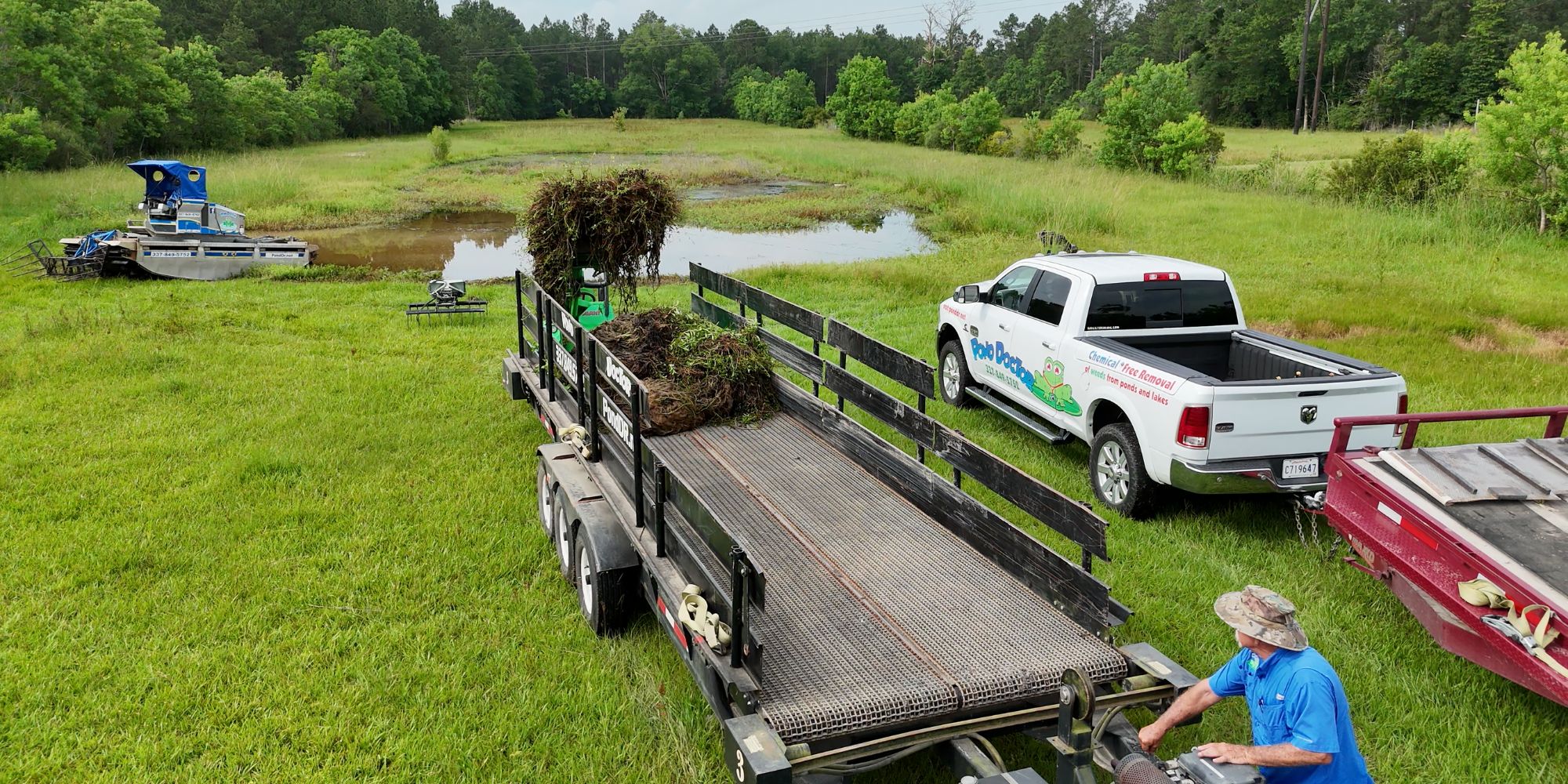
Physical removal is an environmentally safe method that works well for infestations of any size. All plant fragments must be removed, as even small pieces can regenerate. Specialized equipment like the Truxor amphibious machine and clam shell buckets can efficiently remove large mats. Mechanical removal offers several advantages:
- Completely removes plants including roots and stems
- Safe for fish, wildlife, and water quality
- No waiting period before using your pond
- Prevents chemical runoff into surrounding areas
- Provides immediate, visible results
Note: Pond Doctor uses exclusively mechanical, chemical-free methods for all aquatic weed removal.
Chemical Treatment
Aquatic herbicides containing glyphosate or 2,4-D are used by some service providers. These products require careful application by licensed professionals and must be labeled for aquatic use. Chemical treatments have several considerations: they can harm beneficial organisms, often require multiple applications, create waiting periods before the pond is safe to use, and may cause oxygen depletion as plants decompose.
Biological Control
The alligator weed flea beetle has been introduced in some areas as a biological control agent. While it can help reduce growth, it rarely eliminates the plant completely and works slowly compared to other methods.
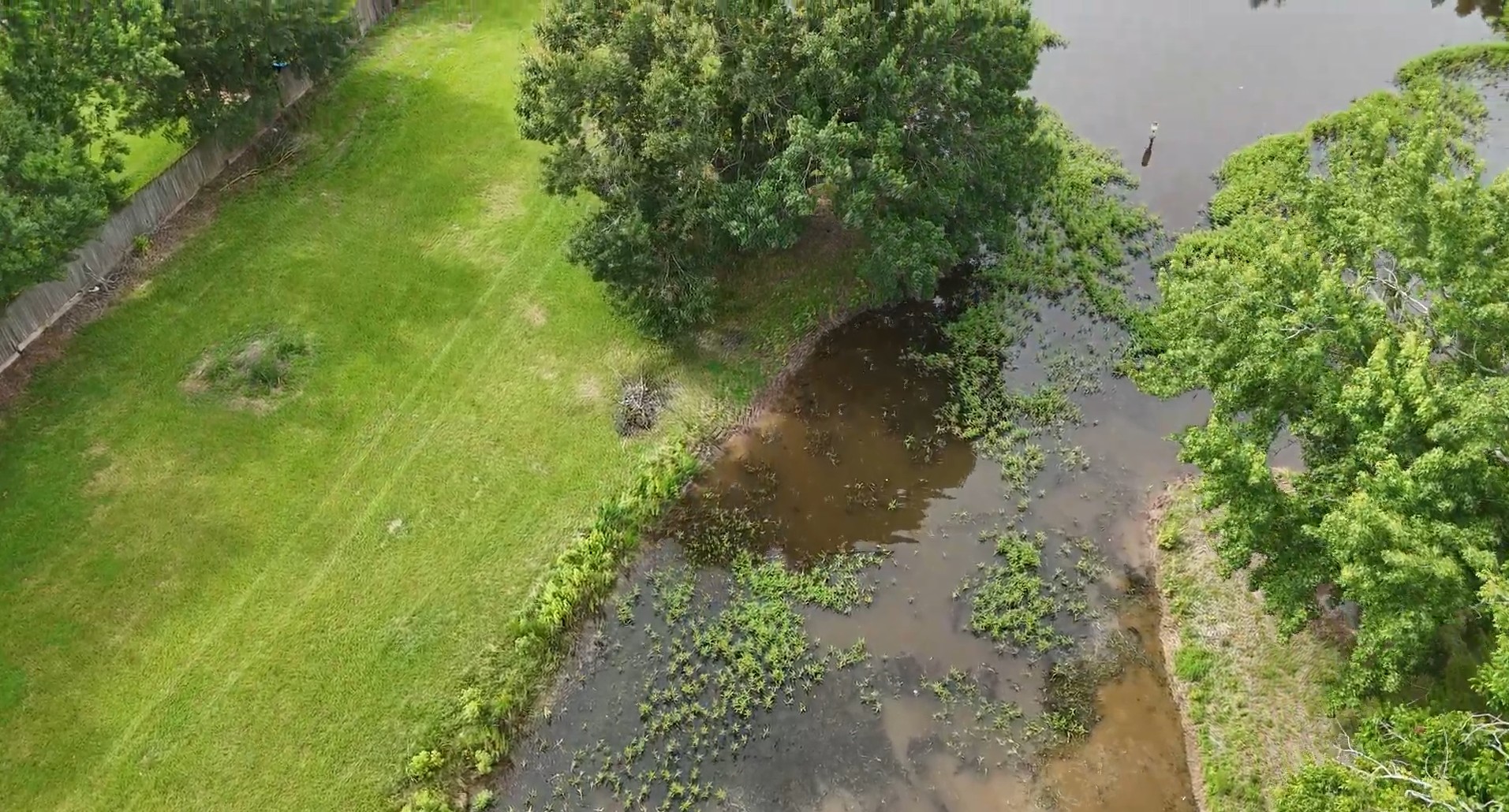
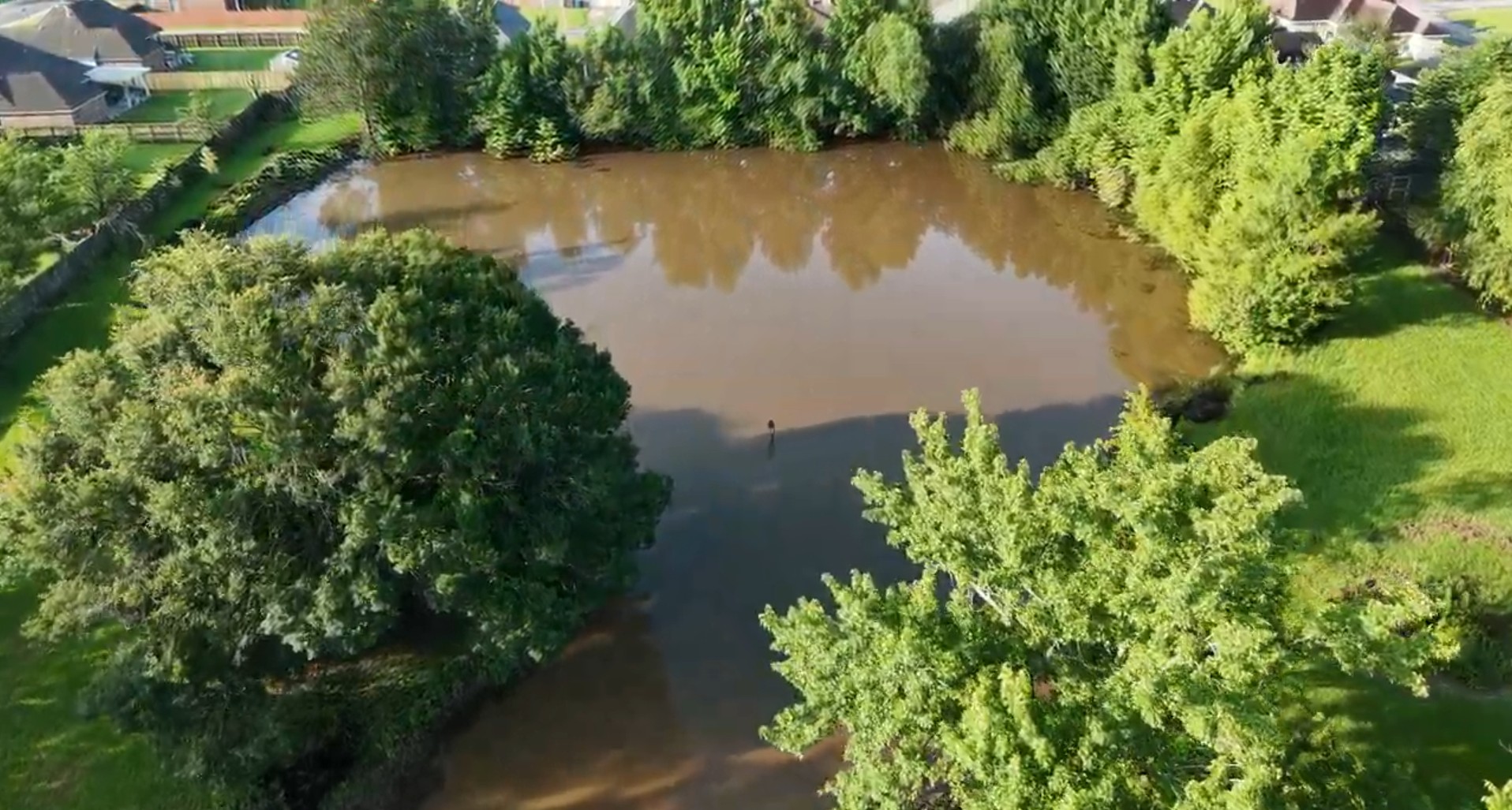
Before/After: Broussard pond alligator weed removal
Prevention Strategies
Preventing alligator weed establishment is easier than controlling it once established:
- Regularly inspect your pond and remove any suspicious plants early
- Clean boats and equipment before moving between water bodies
- Maintain healthy populations of desirable aquatic plants to compete with invaders
- Monitor water quality and address nutrient imbalances
Professional Assistance
Large infestations of alligator weed often require professional intervention. Pond Doctor specializes in aquatic weed control using proven methods and specialized equipment.
Our team can assess your situation and provide complete removal. Contact us for a free consultation and estimate.