Water hyacinth is considered one of the world's most invasive aquatic plants. While its purple flowers are beautiful, this plant can completely take over a pond in weeks. Learn how to identify and control water hyacinth before it destroys your pond ecosystem.
What is Water Hyacinth?
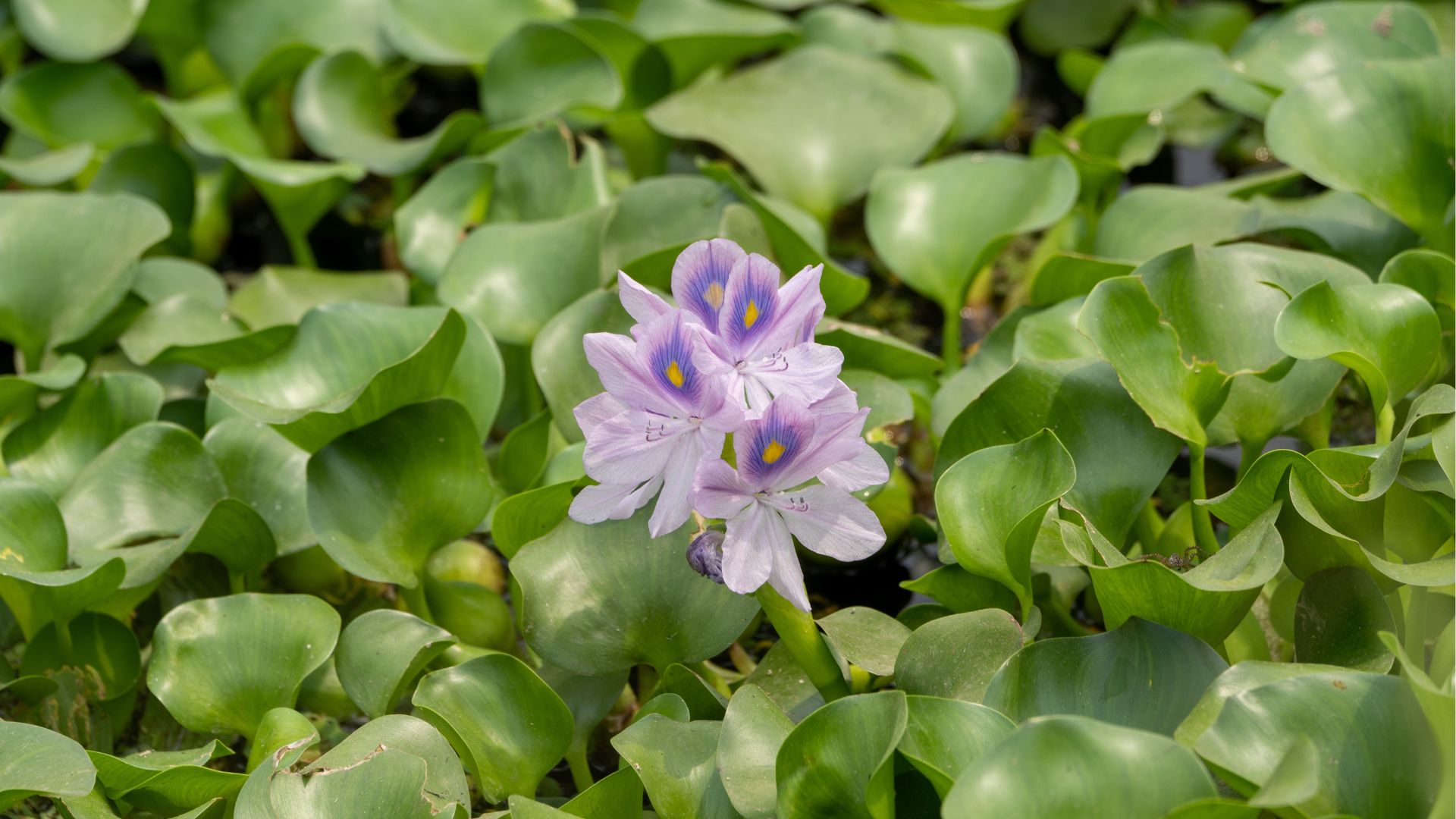
Water hyacinth (Eichhornia crassipes) is a free-floating aquatic plant native to the Amazon basin. Introduced to the United States as an ornamental plant in the 1880s, it has become one of the most problematic invasive species in warm climates.
The plant is incredibly prolific—a single plant can produce over 3,000 offspring in 50 days. Under optimal conditions, water hyacinth can double its population in as little as 12 days, forming dense mats that can cover entire water bodies.
Identifying Water Hyacinth
Water hyacinth is distinctive and relatively easy to identify:
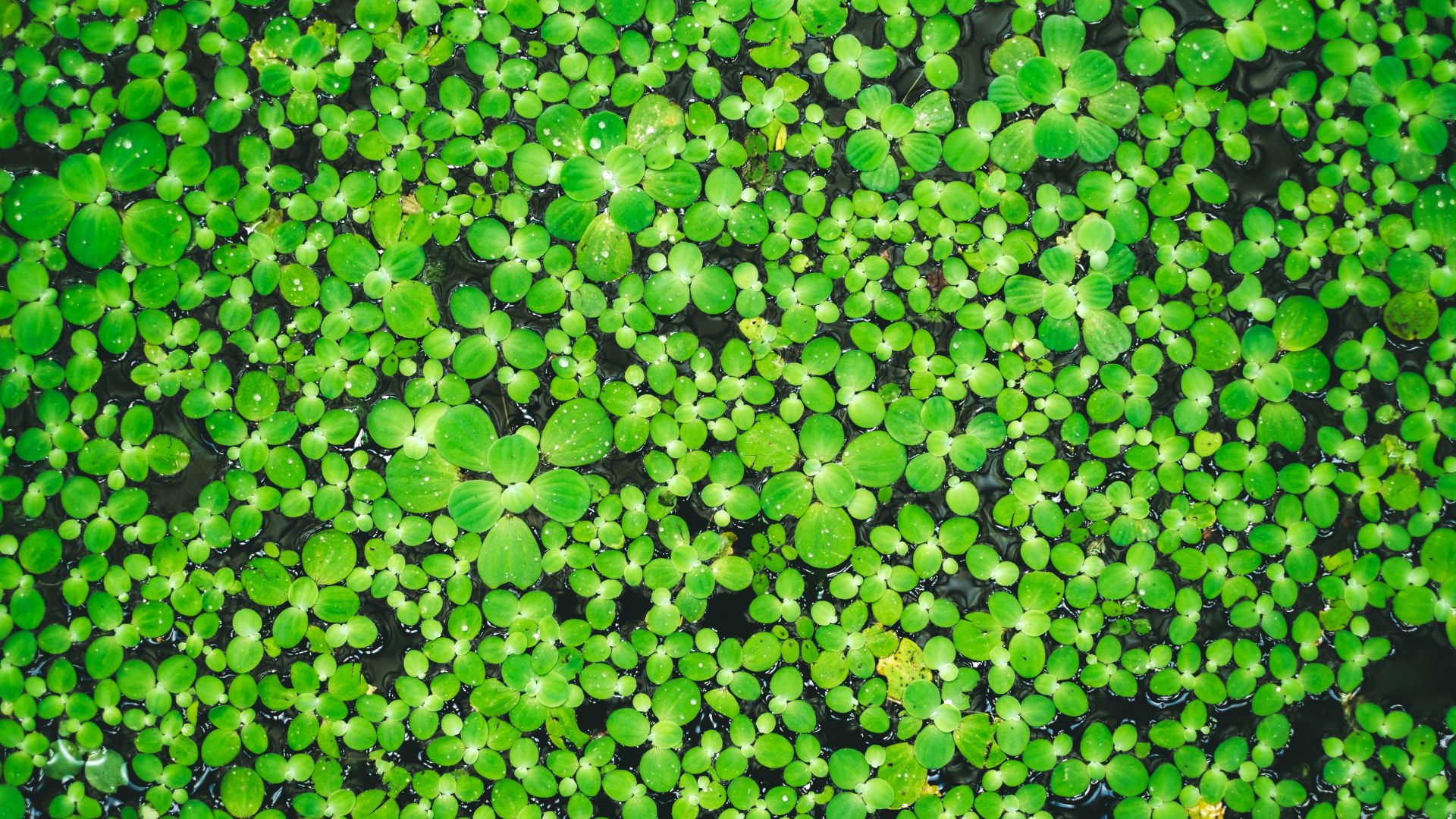
- Leaves: Thick, glossy, rounded leaves 2-6 inches wide
- Stems: Spongy, inflated leaf stalks (petioles) that provide flotation
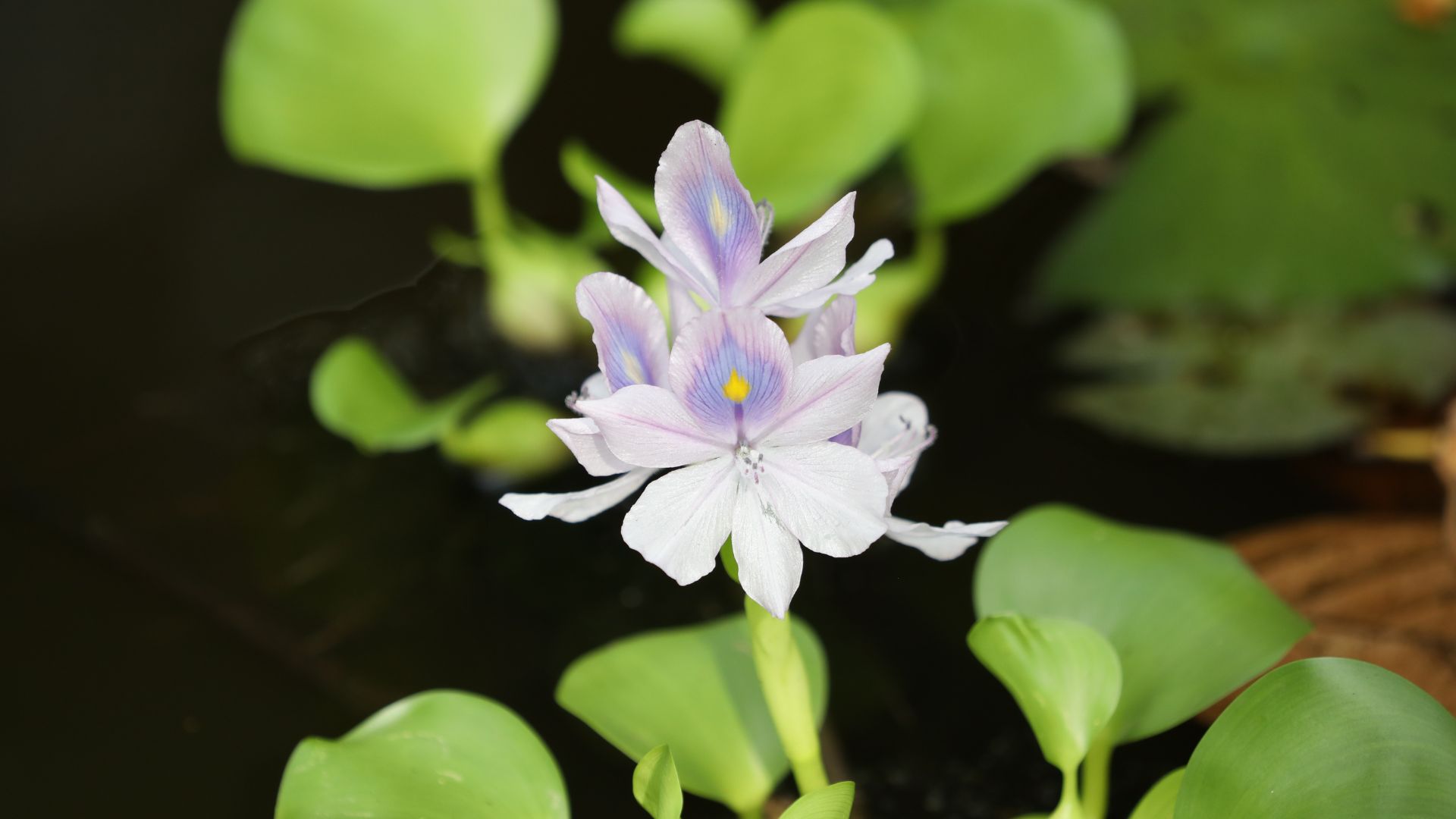
- Flowers: Beautiful lavender to purple flowers with six petals and a yellow spot
- Roots: Long, feathery purple-black roots that dangle underwater
- Height: Can grow up to 3 feet above water surface
Why Water Hyacinth is So Problematic
Despite its attractive appearance, water hyacinth poses severe threats to pond and lake ecosystems:
- Oxygen depletion: Dense mats block sunlight and oxygen exchange, killing fish and other aquatic life
- Water flow obstruction: Clogs waterways, drainage systems, and irrigation channels
- Native plant displacement: Outcompetes and eliminates native vegetation
- Navigation interference: Makes water bodies impassable for boats
- Mosquito breeding: Provides ideal habitat for mosquitoes
- Property value reduction: Makes ponds unusable and unsightly
- Water loss: Increases water loss through transpiration (up to 3 times more than open water evaporation)
Control Methods
Controlling water hyacinth requires aggressive action, especially in warmer climates where it grows year-round.
Physical Removal
Manual removal is effective for small infestations. Remove entire plants including roots and dispose of them on land away from water. Specialized mechanical harvesters are necessary for large infestations. The key is persistence—repeated removal is often necessary.
Mechanical Control
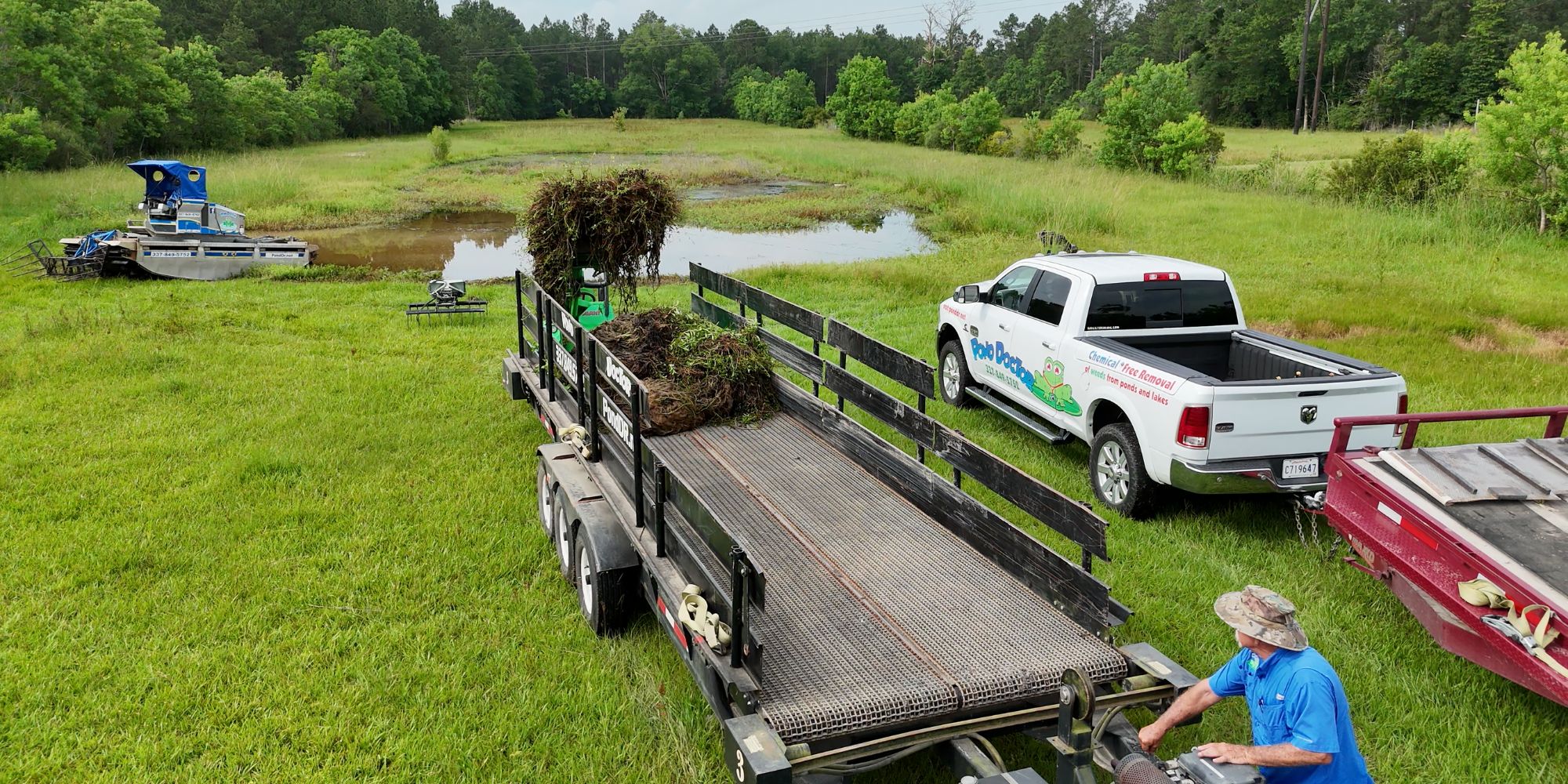
Heavy equipment like aquatic excavators or specially designed harvesting machines can remove large volumes quickly. Amphibious equipment can access difficult areas without damaging pond edges, making mechanical removal viable even for severe infestations. This approach provides immediate results and eliminates the plant material entirely from the ecosystem.
Note: Pond Doctor uses mechanical removal exclusively, avoiding chemical treatments.
Chemical Control
Herbicides containing 2,4-D or glyphosate are used by some service providers against water hyacinth. Application requires licensed professionals, and dying plants can cause severe oxygen depletion that kills fish. Multiple treatments are often needed, and the decomposing plant material remains in the pond, adding to sediment buildup.
Biological Control
Several insects have been introduced as biocontrol agents, including weevils that bore into plant tissue. While helpful, biological controls alone rarely eliminate water hyacinth completely.
Prevention Strategies
The best approach is preventing water hyacinth establishment in the first place:
- Never plant water hyacinth intentionally—it's illegal in many states
- Inspect new aquatic plants carefully before adding to your pond
- Clean equipment and boats before moving between water bodies
- Monitor your pond regularly and remove suspicious plants immediately
- Report infestations to local authorities or extension services
- Maintain a healthy pond ecosystem with diverse native plants
Legal Considerations
Water hyacinth is classified as a prohibited or noxious weed in many states. It is illegal to transport, sell, or cultivate water hyacinth in Louisiana and most southern states. Violators can face significant fines.
Professional Removal is Essential
Large water hyacinth infestations require professional intervention. The rapid growth rate means delays can turn a manageable problem into a pond-covering catastrophe.
Pond Doctor has the specialized equipment and expertise to completely remove water hyacinth. We can respond quickly to restore your pond. Contact us immediately if you suspect water hyacinth in your pond.